
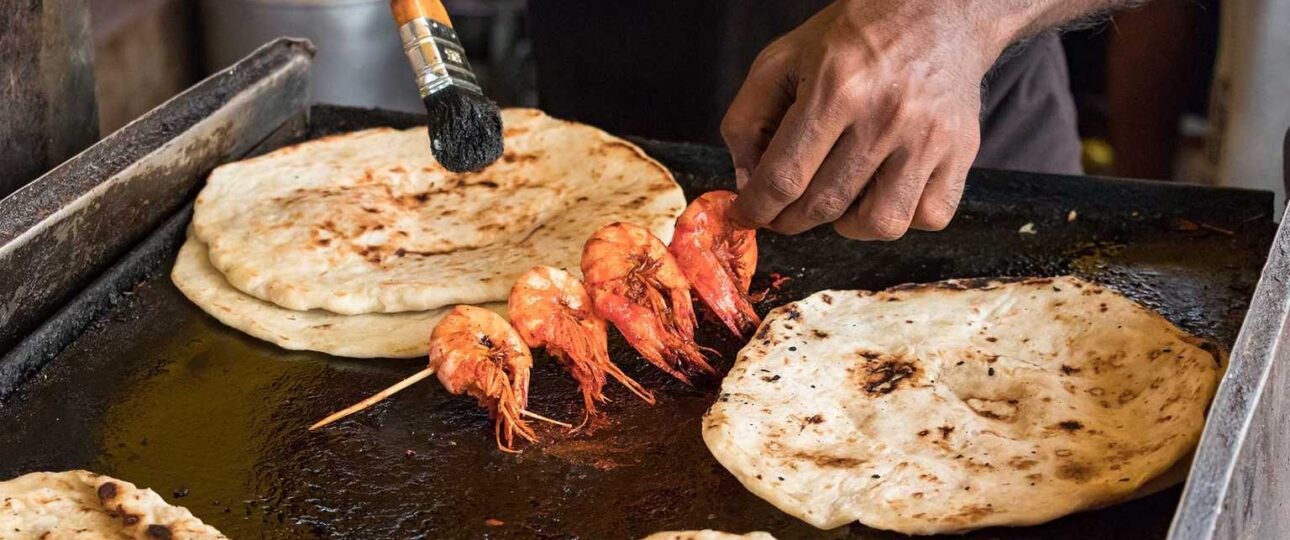
There is a sound that defines Sri Lanka street food and once you’ve heard it, it follows you home. It’s the rapid, rhythmic clang of two metal blades chopping flatbread on a blazing iron griddle at midnight. It’s the hiss of batter hitting a hot clay pan. The crack of a perfectly fried lentil cake being split open. Sri Lanka street food is not just sustenance, it is theatre, ritual, and deeply personal cultural expression, served for a few hundred rupees on a banana leaf by someone whose grandmother invented the recipe. From the chaotic, aromatic promenade of Galle Face Green in Colombo to the ancient fish markets of Jaffna where Tamil fishermen bring in the day’s catch at dawn, Sri Lanka street food tells the island’s entire story, its spice trade roots, its coastal abundance, its Tamil and Sinhalese traditions, its colonial past all in one glorious, fiery, coconut drenched bite.
Grab a fork. Or better yet, eat with your hands. Let’s go.
Why Sri Lanka Street Food Is in a League of Its Own
A Cuisine Born From Centuries of Culture & Coast
Before we hit the streets, here’s why Sri Lanka’s street food culture deserves your full, undivided attention:
- Unmatched depth of spice – Sri Lanka’s spice trade history (cinnamon, pepper, cardamom, cloves) infuses every street stall with flavors that have been evolving for over 2,000 years
- Coconut as a way of life – fresh coconut milk, grated coconut, and coconut oil appear in virtually every dish, giving Sri Lankan street food a richness that is entirely its own
- Ocean-to-table freshness – surrounded by the Indian Ocean on all sides, virtually every coastal street stall works with fish and seafood caught that very morning
- Banana leaf service – many street meals are still served on banana leaves, which subtly flavour the food and are completely biodegradable
- Extraordinary value – a full street meal costs LKR 300-800 (approximately $1-3 USD) in 2026, making Sri Lanka one of the world’s greatest destinations for budget food lovers
- Cultural immersion – approximately 47.89% of international visitors to Sri Lanka cite experiencing authentic local cuisine as a primary motivation for their trip
Sri Lanka Street Food in Colombo – The Capital of Culinary Chaos
Where the Street Food Journey Begins
Street food in Colombo offers the most diverse and accessible options for visitors, Galle Face Green remains the most famous location, with dozens of vendors serving everything from isso vadai to fresh corn on the cob. The beachfront setting provides the perfect atmosphere for sunset dining.
Galle Face Green – Colombo’s Most Iconic Street Food Promenade
For a street food experience you are unlikely to repeat anywhere else in Sri Lanka, head to this beloved seaside promenade in Colombo. Every day after 6pm, street food vendors set up their stalls and the evening air is filled with the aroma of deep fried goodies and pungent spices. This is where Colombo’s soul spills out onto the pavement families, couples, office workers, and wide-eyed tourists all sharing the same salty breeze and the same sizzling food. Walking the full length of Galle Face Green with a cone of isso vadai in one hand and a king coconut in the other is one of the great simple pleasures of travel anywhere in Asia.
What to Eat at Galle Face Green:
1. Isso Vadai – Sri Lanka’s Greatest Street Snack
Deep fried dahl cakes topped with shrimp, isso vadai is one of the most beloved foods in Sri Lanka. Crispy on the outside, soft and spiced within, with a whole prawn pressed into the top before frying. Some vendors crown theirs with tiny crabs, adding a satisfying crunch to the lentil cake. It is, without exaggeration, one of the finest things you will eat anywhere in the world for under $1.
2. Kottu Roti – The Dish That Defines Sri Lanka Street Food
The king of Sri Lankan street food, kottu roti chops godamba roti into bits, stir-fried with veggies, meat or egg, garlic, ginger, and spices on a hot plate, listen for the rhythmic chop-chop in Pettah markets or Hikkaduwa stalls. Watching a kottu being made is genuinely mesmerising two heavy metal blades work in a rapid, hypnotic rhythm against the iron griddle, the cook’s arms moving with a speed and precision that makes it look effortless. The sound travels for a full city block. The smell travels further.
Pilawoos in Colombo is considered the iconic place to try kottu, a legendary late-night institution that has been feeding Colombo’s after-dark crowd for decades. Go after 10 PM and join the queue that stretches out the door. It is worth every minute.
3. Achcharu – The Addictive Spiced Fruit Pickle
Achcharu is a blanket name for all kinds of spiced and pickled fruits like mango, pineapple, veralu (Sri Lankan olives), ambarella, and guava. You can typically find all the varieties in one cart divided into sections. The combination of sweet, sour, and fiery chilli is simultaneously refreshing and face meltingly intense the kind of snack that you swear you’ll stop after three pieces, and then finish the entire box.
Sri Lanka Street Food in Kandy – Temple City Tastes
Culture, Spice & Sacred Flavours
As the cultural heart of Sri Lanka, Kandy is home to the Temple of the Sacred Tooth Relic and serene lakeside vibes. The city’s street food scene reflects its spiritual character slower, more traditional, and deeply rooted in hill-country cooking traditions.
1. Rice & Curry – The Undisputed National Dish
No Sri Lankan meal beats rice and curry served on banana leaves for extra aroma. Families in Kandy or Anuradhapura pile on 10+ dishes daily. Kandy’s version of rice and curry is the hill-country expression of the national dish, clay pots of slow-simmered curries, fresh coconut sambols, crispy papadams, and the intoxicating aroma of curry leaves and pandan. Look for the lunch packets (bath pakaya) that office workers queue for daily a mountain of rice with four or five curries wrapped in a banana leaf for under LKR 300.
2. Kiribath – Milk Rice for Celebrations & Every Day
Kiribath, or milk rice, is a celebratory dish made with rice cooked in coconut milk served in diamond-shaped pieces with lunu miris or jaggery on the side. Kiribath is Sri Lanka’s comfort food of choice made for festivals, birthdays, new year celebrations, and ordinary Tuesday mornings with equal enthusiasm. In Kandy, street vendors near the Temple of the Tooth serve it warm and fragrant, the coconut milk still steaming.
3. Watalappan – The Dessert You Didn’t Know You Needed
Watalappan is a spiced coconut custard made with jaggery, cardamom, and nutmeg creamy, rich, and perfect after a spicy meal. This Malay-influenced dessert arrived with Sri Lanka’s Muslim community and has since become one of the island’s most beloved sweet dishes. The dark, trembling custard scented with cardamom and nutmeg, sweetened with kithul jaggery is what dreams taste like.
Sri Lanka Street Food in Galle & the South Coast – Seafood & Sambol
Where the Ocean Meets the Street
From bustling fish markets to beachfront restaurants, the south offers incredible seafood experiences, fish ambul thiyal, a unique sour fish curry made with dried goraka, is a dry curry designed to preserve the fish and has a distinct tangy flavour uniquely Sri Lankan.
1. Fish Ambul Thiyal – The South’s Most Iconic Dish
Tuna cubes preserved with goraka (dried tamarind), pepper, cinnamon, and pandan for a sour kick, a southern speciality worth buying fresh from Galle fish markets. This coal-black, deeply fragrant curry is unlike anything else in Sri Lankan cuisine or anywhere else on earth. The goraka fruit acts as both flavour and preservative, giving the tuna a tangy, almost smoky depth that is completely addictive. Eaten with plain rice, it is devastatingly good.
2. Pol Sambol – The Condiment That Goes With Everything
This coconut relish is made with grated coconut, chilli, lime, and onions, it adds flavour to almost any meal and is especially popular in Colombo and the south. Pol sambol is the great Sri Lankan condiment appearing alongside every meal from breakfast hoppers to midnight kottu. Each vendor and household has their own ratio of coconut to chilli, and arguments about whose pol sambol is best are taken extremely seriously.
3. Mirissa & Unawatuna Beach Stalls – Seafood at Golden Hour
The south coast beach towns offer some of Sri Lanka’s most atmospheric street food experiences plastic chairs dug into the sand, fairy lights strung between palms, and grilled prawns brought out on banana leaves still sizzling from a charcoal fire. Order whole grilled cuttlefish, spiced with local masala and lime, and eat it watching the Indian Ocean turn copper at sunset.
Sri Lanka Street Food in Jaffna – The Fiery, Soulful North
The Final Destination and the Most Extraordinary of All
Food in Jaffna is bold, spicy, and aromatic, reflecting centuries of Tamil heritage. What makes street food in Jaffna unique is its authenticity, many recipes are passed down through generations and are prepared with locally sourced spices, seafood, and fresh produce. From crispy snacks to seafood curries served in banana leaves, each bite is an adventure.
The northern Sri Lanka city of Jaffna is often described as a seafood heaven and is home to culinary experiences that are difficult to find in other parts of the country. Few travellers in Sri Lanka ever make it to Jaffna, which is quite a shame considering what a vibrant and experientially different destination it is.
1. Jaffna Crab Curry (Nandu Kari) – Sri Lanka’s Most Legendary Dish
Jaffna crab curry is a traditional spicy crab curry that originated in the northern regions of Sri Lanka. The dish typically uses either blue swimmer or mud crabs, broken into smaller portions and simmered in a clay pot with coconut milk, curry leaves, seasonings, and the seed pods of the drumstick tree. The undisputed king of Jaffna cuisine, made with fresh lagoon crabs, a generous amount of chilli powder, roasted curry powder, and often using palmyrah toddy or jaggery for a touch of sweetness and depth, it’s a dish that promises a fiery kick and an unforgettable flavour.
There are many cooks from Jaffna in Colombo and other parts of the island, and yet people will still drive 10+ hours to spend a weekend in Jaffna with the sole purpose of eating its delicious seafood dishes and the famous Jaffna crab curry. That fact alone tells you everything you need to know.
2. Jaffna Kool (Odiyal Kool) – The Soul Food of the North
Perhaps the most iconic dish in the region, Jaffna Kool is a hearty seafood soup made with crab, prawns, cuttlefish, and seasonal fish thickened with palmyra flour and flavoured with tamarind, cumin, and local spices. Jaffna Kool is an extraordinarily unique and mouth-watering dish that can only be found in Jaffna, made with numerous ingredients including three types of fish, two kinds of crab, cuttlefish, prawns, jackfruit, long green beans, leafy greens, tamarind, a quantity of chilli powder, and odiyal flour from the palmyra tree. After several hours on the stove, the result is a wonderfully thick, flavourful, and slightly spicy soup that was traditionally served in coconut husks.
This is the dish that separates Jaffna from everywhere else, a deeply complex, ancient recipe that has been made the same way for generations. Every bowl is a history lesson. Every spoonful is extraordinary.
3. Palmyrah Toddy – Jaffna’s Ancient Thirst Quencher
Toddy is a beverage derived from the sap of the palmyra tree’s flower. When the toddy is collected, it is very sweet and non-alcoholic with a pleasant coconutty flavour. Left to ferment, it becomes mildly alcoholic and deeply complex, the traditional drink of Jaffna’s fishing community, served in roadside toddy taverns (tavernas) as the sun goes down over the lagoon.
The Complete Sri Lanka Street Food Tour – City by City
| City | Signature Dish | Best Location | Price Range |
|---|---|---|---|
| Colombo | Kottu Roti + Isso Vadai | Galle Face Green, Pilawoos, Pettah | LKR 100-800 |
| Kandy | Rice & Curry + Watalappan | Central Market, Fort area | LKR 200-500 |
| Galle | Fish Ambul Thiyal + Hoppers | Lucky Fort Restaurant, Fish Market | LKR 300-800 |
| Mirissa | Grilled Seafood Platter | Beachside stalls at sunset | LKR 500-1,500 |
| Trincomalee | String Hoppers + Devilled Prawn | Beach road stalls | LKR 200-800 |
| Ella/Hill Country | Milk Rice + Tea Snacks | Guesthouse breakfasts, roadside stalls | LKR 150-400 |
| Jaffna | Jaffna Kool + Crab Curry | Market vendors, Green Grass Hotel | LKR 300-3,500 |
Golden Rules of Street Food in Sri Lanka
- Eat with your right hand – the traditional way, and the most delicious way
- Always accept a thambili – king coconut is offered everywhere and it’s rude (and foolish) to refuse the world’s best hydration
- Don’t be afraid of the spice – it gets easier after day two, and then you’ll never want food that isn’t this fiery again
- Follow the locals – the best stalls have no English signage and a permanent crowd of local office workers
- Eat late – the best street food energy in Sri Lanka happens between 7 PM and midnight
Sri Lanka Street Food Is the Island’s Greatest Story
Every culture tells its story through its food. And Sri Lanka with its 2,000 years of spice trade history, its Tamil and Sinhalese culinary traditions, its colonial layers, its ocean abundance, and its fierce pride in regional recipes tells its story more vividly, more deliciously, and more generously than almost anywhere on earth.
Sri Lanka street food represents the heart and soul of the island’s culinary heritage, offering an authentic taste of local life that no restaurant can fully replicate. The adventure of discovering Sri Lanka street food extends beyond eating itself, it’s about engaging with friendly vendors, watching skilled cooks work, and discovering hidden gems. From the first isso vadai at Galle Face Green to the last bowl of Jaffna Kool in the north, the culinary road from Colombo to Jaffna is one of the great food journeys on earth.
Ready to eat your way across Sri Lanka? Let Overa Tours build your perfect culinary itinerary from street stalls to seafood feasts, spice markets to tea plantations.

