
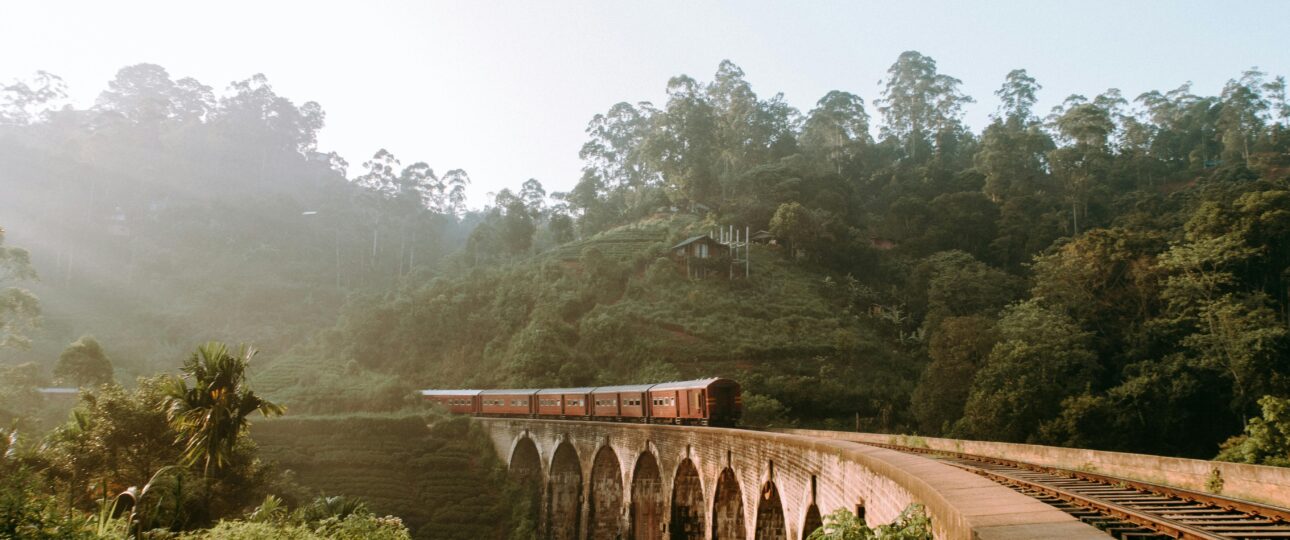
There is a moment on the trail, somewhere between a mist-wrapped ridge above Haputale and a roadside stall where a Tamil tea plucker presses a glass of hot milk tea into your hands without asking when you understand exactly why the Pekoe Trail Sri Lanka has taken the hiking world by storm since its launch in 2023. This is not just a walk through tea estates; it is a 300-kilometre immersion into the living, breathing heart of Sri Lanka’s highlands, where colonial history, Indigenous Tamil culture, cloud-forest biodiversity, and the ancient rhythms of the world’s most famous beverage converge on a single, extraordinary footpath that winds from Kandy to Nuwara Eliya across 22 carefully crafted stages. Named after the young tea buds ‘pekoe’ hand-plucked by workers who have harvested these same slopes for generations, the Pekoe Trail Sri Lanka is Sri Lanka’s first long-distance walking trail, designed by avid adventurer Miguel Cuñat with the backing of the EU and US Aid, and stewarded by the Pekoe Trail Organisation to ensure every kilometre walked puts real economic benefit into the rural communities it passes through. Recognised globally as one of Asia’s best hiking experiences and featured by National Geographic as a trail that shows Sri Lanka on a grassroots level with no script, no tour bus, and no stage-managed performance, the Pekoe Trail Sri Lanka offers an experience that is both physically rewarding and deeply human: a journey through one of the world’s most beautiful upland landscapes where every stage reveals another layer of what this remarkable island truly is.
What Is the Pekoe Trail?
The Pekoe Trail is a 300+ kilometre walking trail traversing the central highlands of Sri Lanka, the country’s first continuous long-distance hiking route, made up of 22 interconnected stages that can be completed in short sections, as a highlights selection over one to two weeks, or as a full end-to-end journey taking 14 to 18 days. The trail follows old plantation roads and footpaths carved during the colonial era, linking mountain ridges, forest reserves, and villages shaped by the rhythms of tea.
The path meanders past rows of emerald-green tea bushes, misty valleys, cascading waterfalls, and forested ridgelines where the air carries the scent of eucalyptus and wildflowers. Along the way, tea pickers move rhythmically through the fields, and rural life unfolds in small markets, temples, and roadside tea stalls that welcome passing walkers. Every stage reveals another layer of Sri Lanka’s highlands: colonial-era bungalows hidden among tea fields, Buddhist shrines on windswept ridges, and homestays where travellers share meals of rice, curry, and sweet milk tea.
- Start Point – Ceylon Tea Museum, Hanthana, just outside Kandy. The train from Colombo takes ~2.5 hrs.
- End Point – Pedro Tea Estate, Nuwara Eliya, ‘Little England’ of Sri Lanka, accessible from Nanu Oya station.
- Best Season – December to April (dry season). November to April overall best. Leeches peak May-June and Sep-Dec.
- Official App – The Pekoe Trail app offers turn by turn navigation, stage booking, and community info. Download before you go.
- Trail Pass – An official Pekoe Trail pass is required, purchase through the official website or app. Supports community funds.
- Fitness Level – Moderate overall. Most stages suit beginners. Stages 2, 12, and 15 are more demanding. Stages welcome ages 12–75.
The Route: Kandy to Nuwara Eliya
The trail begins at the Ceylon Tea Museum in Hanthana on the outskirts of Kandy, Sri Lanka’s cultural capital and the perfect place to spend a day or two before starting. From Hanthana, the trail winds southward through the heart of the central highlands, passing through major hubs including Hatton, Haputale, and Ella, before concluding at the Pedro Tea Estate in Nuwara Eliya. The trail passes through the districts of Kandy, Nuwara Eliya, Badulla, and Ella, linking iconic hill-country towns with smaller villages tucked into valleys and ridges.
Elevations rise from 1,000 to over 2,000 metres, giving hikers crisp mountain air, sweeping views of terraced slopes, and cooler climates that contrast with the tropical lowlands below. Every section of the trail has its own charm alongside the standard-issue tea estate vistas, temples, churches, eucalyptus and pine forests, old bridges and new hotels, colonial country clubs, and tea factories at various stages.
The Best Stages: Where the Trail Comes Alive
S2 – Galaha to Loolecondera – Birthplace of Ceylon Tea
This is the most historically significant stage on the entire trail. It leads you to Loolecondera Estate, where James Taylor planted the very first commercial tea crop in Sri Lanka back in 1867. You will pass James Taylor’s Seat, a stone lookout where he surveyed his fields and the ruins of his original cottage. Incredibly, Field No. 7, the actual first tea field ever planted in Sri Lanka, is still growing today. Walking past it with that knowledge is quietly extraordinary.
The descent through vibrant tea fields, giant rock outcrops, and misty rainforest makes this one of the most visually dramatic stages on the trail. Expect steep sections and around 5-6 hours of walking.
- Distance~14.5 km
- Time – 5–6 hrs
- Highlight – Tea Heritage
S7-8 Maskeliya Valley – Heart of the Tea Story
Stages 7 and 8 are on fairly easy terrain and take you right through the heart of the tea story. The defining feature of Stage 10, which covers a similar landscape is the constant, commanding view of Adam’s Peak (Sri Pada) rising in the distance. This sacred mountain accompanies you for much of the walk, while the Castlereagh Reservoir glitters in the valley below. The plantations here are vast and grand, quite different in scale from the earlier Kandy-area stages.
The area around Thalawakele, the heart of the Dimbula tea district at 1,198m gives a genuine glimpse of Sri Lankan hill-country life amid stunning tea landscapes before the trail ascends toward St. Clair’s Falls, known as the ‘Little Niagara of Sri Lanka.’
- Distance~13-15 km
- Time – 4-6 hrs
- Highlight – Panoramic Views
S13-14 Haputale to Lipton’s Seat – The Iconic Viewpoint
From Haputale, the trail climbs steadily into cooler forest reserve before opening onto tea estate roads and scenic ridgelines with views stretching across the Thotalagala and Dambatenne Valley with glimpses towards Lipton’s Seat, where Scottish tea baron Sir Thomas Lipton is said to have kept an eye over his empire from this lofty vantage point. The morning mist clings to layers of forested hills; below, the tea fields are a sea of electric green.
This is classic hill country walking at its finest. Haputale itself is one of Sri Lanka’s most beloved hill-country towns and makes an ideal base for two or three stages, with excellent accommodation options and genuine local character undiluted by mass tourism.
- Distance~9.5-13 km
- Time – 3-5 hrs
- Highlight – Lipton’s Seat
S15 Horton Plains – World’s End & Cloud Forests
Stage 15 is widely regarded as the crown of the entire trail. It passes through Horton Plains National Park a UNESCO-listed plateau at over 2,100 metres, where grasslands, cloud forests, waterfalls, and breathtaking cliff scenery combine for one of the most dramatic walking days in Asia. The trail leads to World’s End, a sheer escarpment with views that plunge 870 metres to the plains below on a clear morning.
Note that national park entrance fees apply for this stage and are an additional cost for international visitors. Begin as early as possible ideally at first light to reach World’s End before the mist rolls in by late morning. The highland endemics here, Sri Lanka Whistling Thrush, Yellow-eared Bulbul, Dull-blue Flycatcher are among the rarest birds in the country.
- Altitude – 2,100-2,170m
- Time – 5-7 hrs
- Highlight – World’s End
S15-16 Ella – Nine Arches, Ella Rock & the Valley Views
Stages 15 and 16, near Ella, offer the most diverse landscapes of any section on the trail paths lined with towering eucalyptus trees, panoramic valley views, and an intimate brush with the iconic Nine Arches Bridge at Demodara, one of Sri Lanka’s most photographed landmarks, seen here from an angle the tour buses never find. The descent towards Kithal Ella and into Ella town brings a genuine sense of completion after days in the remote highlands.
Ella makes an excellent two-night base for completing both stages, with a wide range of accommodation and restaurants. From Ella, the trail continues north through Bandarawela and Nuwara Eliya for those completing the full end-to-end journey.
- Distance~10-14 km
- Time – 4-5 hrs
- Highlight – Nine Arches
All 22 Stages at a Glance
Each stage has its own character and can be walked individually, in clusters of two or three, or as the complete end to end journey. As of early 2026, 16 out of 22 stages are officially open with more expected to reopen as trail maintenance continues.
| Stage | Route | Distance | Difficulty | Key Highlight |
|---|---|---|---|---|
| 1 | Hanthana → Galaha | ~14 km | Moderate | Hanthana Tea Estate, Kandy views |
| 2 | Galaha → Loolecondera | ~14.5 km | Hard | James Taylor’s birthplace of Ceylon tea |
| 3 | Loolecondera → Deltota | ~12 km | Moderate | River rock pools, river crossing by canoe |
| 4 | Deltota → Pundaluoya | ~11 km | Easy | Classic tea estate roads, village life |
| 5 | Pundaluoya → Bogawantalawa | ~13 km | Moderate | Valley transitions, tea panoramas |
| 6 | Bogawantalawa → Maskeliya | ~12 km | Moderate | Maskeliya Oya river, grand plantation scale |
| 7 | Maskeliya → Thalawakele | ~13 km | Easy | Adam’s Peak backdrop, Castlereagh Reservoir |
| 8 | Thalawakele → Hatton | ~12 km | Easy | St. Clair’s Falls (‘Little Niagara’), tea factory |
| 9 | Hatton → Norwood | ~11 km | Easy | Heritage bungalows, classic colonial roads |
| 10 | Norwood → Belihuloya | ~13–15 km | Moderate | Adam’s Peak views, Castlereagh panorama |
| 11 | Belihuloya → Udaweriya | ~16 km | Hard | Hidden Valley, abandoned estate settlements |
| 12 | Udaweriya → Haputale | ~18 km | Hard | Longest stage, ridgeline views, Haputale descent |
| 13 | Haputale → St. Catherine’s | ~13 km | Moderate | Lipton’s Seat approach, tea ridgelines |
| 14 | St. Catherine’s → Makulella | ~9.5 km | Easy | Village life, Namunukula peak views |
| 15 | Makulella → Horton Plains | ~12 km | Hard | World’s End cliff, UNESCO cloud forest |
| 16 | Horton Plains → Ella | ~14 km | Moderate | Nine Arches Bridge, Ella Rock, eucalyptus paths |
| 17–22 | Ella → Nuwara Eliya | ~70 km | Moderate | Final highland stages, Pedro Tea Estate finish |
Wildlife Along the Trail
The Pekoe Trail passes through some of Sri Lanka’s most biodiverse habitats, and wildlife encounters are a constant companion. Sambar deer, toque macaques, and purple-faced langur monkeys are regularly seen along forest sections. The trail also passes through forest reserves, particularly around Hanthana and Horton Plains, where leopards are known to inhabit the area sightings are rare, but the possibility adds a genuine wildness to those sections.
Birds are a constant highlight. Sri Lanka is home to dozens of endemic species, and the hill country is one of the best places to spot them. Early mornings on any forested stage reward birdwatchers with the Sri Lanka White-eye, Dull-blue Flycatcher, Yellow-eared Bulbul, and the striking Sri Lanka Blue Magpie. The soundscape of the trail waterfalls, babbling brooks, bird calls, temple gongs, and the bells of Hindu shrines, is itself one of the great sensory pleasures of the walk.
What to Pack for the Pekoe Trail
- Sturdy Hiking Shoes – Waterproof if possible, some paths are rough, rocky, and muddy after rain.
- Rain Poncho – Sudden showers happen even in dry season. A poncho over an umbrella in forest paths.
- Day Pack (20–25L) – Light pack for daily essentials. Use luggage transfer services for main bags between stages.
- Sun Hat + Sunglasses – The highland sun is intense despite the cool temperatures on open estate roads.
- Head Torch – Essential for early morning starts, forest sections, and any camping stages.
- Pekoe Trail App – Download before you go, turn by turn navigation, booking, community updates.
Expert Hiking Tips for the Pekoe Trail
- Hire a local specialist trekking guide, particularly for the harder stages. A good guide improves your safety, helps with navigation, and brings the cultural and natural history of the trail to life in a way no app or guidebook can match.
- You don’t need to walk all 22 stages. A highlights selection of 5-7 stages covering Kandy, Haputale, Horton Plains, and Ella is a deeply satisfying one-week experience and covers the trail’s greatest moments.
- Use luggage transfer services between stages. Carrying a full pack over 300km is exhausting and unnecessary, most operators and guesthouses can arrange transfers at modest cost.
- Book accommodation at least two to three weeks in advance during the December-April peak season. The best tea estate bungalows fill up quickly, especially around Horton Plains and Ella.
- Carry snacks and a packed lunch for longer stages. Roadside stalls and village shops appear regularly on most stages, but a few remote sections (especially Stage 11-12) have limited options mid-route.
- Join the Pekoe Trail Hikers Group on Facebook for real-time advice, recent trail reports, and community from experienced hikers who have completed the route.
Getting to the Trail
To the start at Hanthana (near Kandy): The scenic train journey from Colombo Fort to Kandy takes approximately 2.5 to 3 hours and is worth enjoying in its own right. From Kandy, the Ceylon Tea Museum at Hanthana is a 15-minute drive. Between stages: The famous Colombo to Badulla hill country train line runs close to many of the southern stages, making it easy to reach starting points. Buses and local taxis connect smaller towns. To the finish at Pedro Tea Estate (Nuwara Eliya): Alight at Nanu Oya station and take a short tuk-tuk or taxi into Nuwara Eliya town.
Walk the Trail That Changes Everything
There is no other experience quite like it in South Asia. The Pekoe Trail Sri Lanka is more than a hiking route, it is a slow, deliberate immersion into a landscape and a way of life that most visitors to the island never come close to experiencing. From the first misty morning above Hanthana to the final celebratory cup of Ceylon tea at the Pedro Tea Estate in Nuwara Eliya, every stage of the trail offers something that recalibrates your understanding of what travel can be: genuinely connected, unhurried, and alive with the kind of human warmth that only comes when you arrive on foot, covered in mud, at someone’s door. Whether you walk two stages or all twenty-two, the Pekoe Trail Sri Lanka will leave you with stories, friendships, and a sense of the island’s highland soul that no beach resort or temple tour can replicate. Let Overa Tours help you plan the perfect stages for your time, fitness, and travel style.


